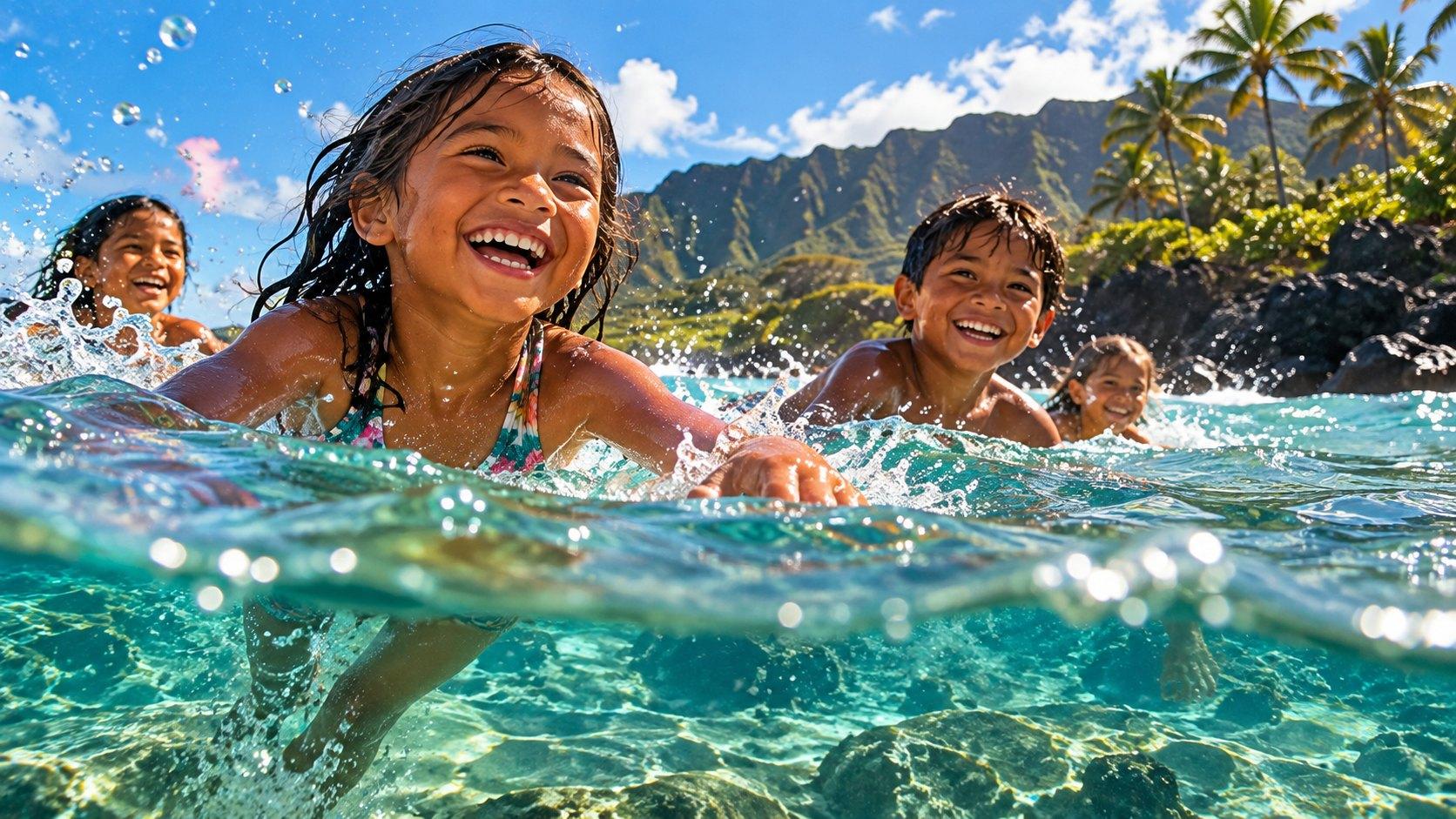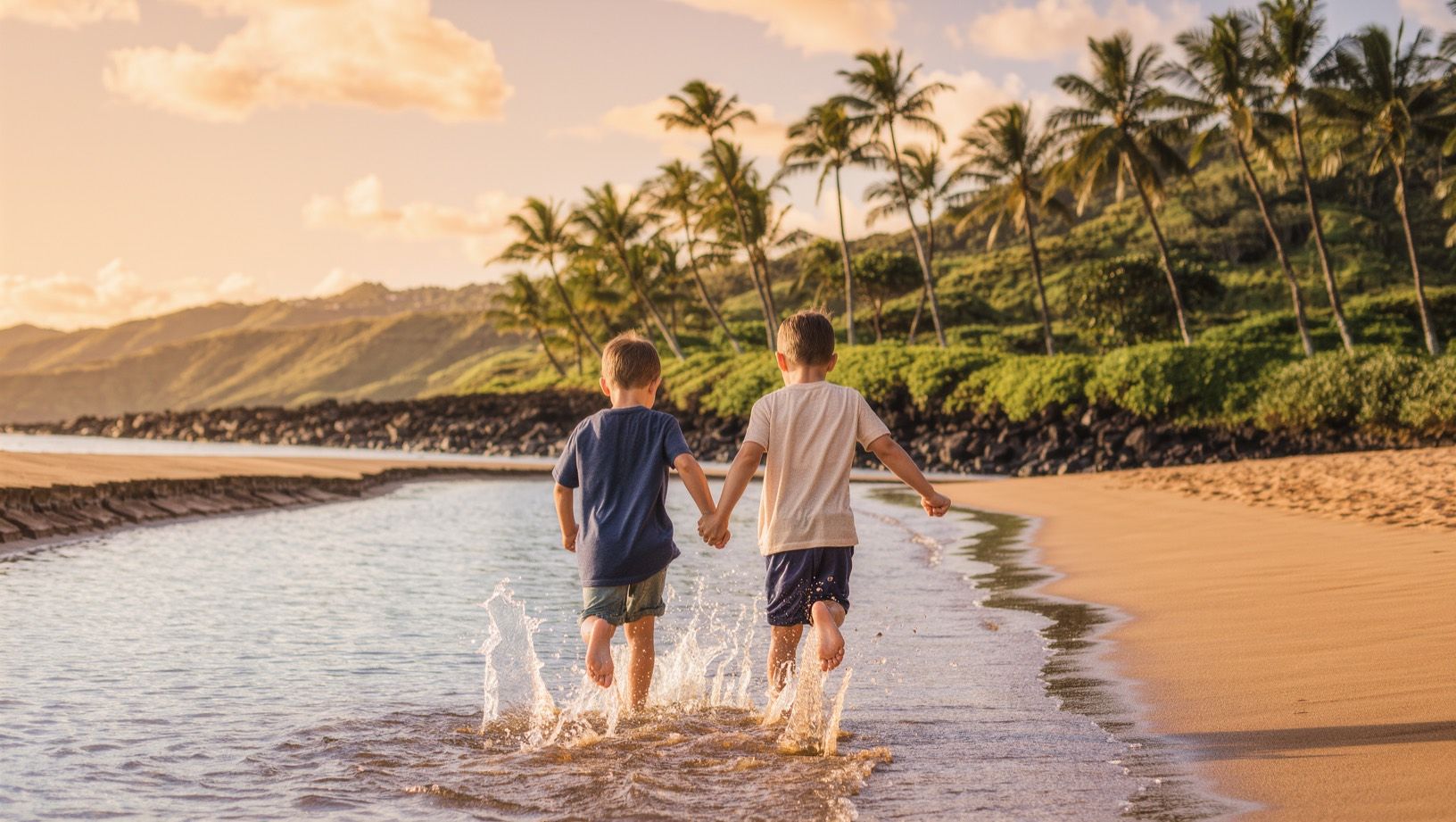
“We got keiki swimming where the freshwater meets the sea.” That is a line from our song “Let Them Grow,” and every parent on Hawaiʻi Island knows the place it describes. It is where the stream reaches the bay, the water is warm and shallow, and the kids do not want to leave. It is also where the question comes up: is it safe?
Short answer: for most children on most days, yes, and the water is one of the best things about growing up here. The longer answer is that kids are the group the health agencies worry about most, and the conditions that raise the risk are specific enough that a parent can learn them.
Why kids are the ones to think about
The CDC says children, pregnant women and people with weakened immune systems are most at risk from germs in swimming water. Diarrhea is the most common cause of swimming-related outbreaks, and the way people get sick is mostly by swallowing a little water that contains germs. The CDC’s advice is the same wherever you swim: don’t swallow the water, because even water that looks clean can have germs in it. Other common swimming illnesses it lists include skin rashes.
Small children swim the most, stay in the longest and put their faces in the water. You cannot realistically stop a four-year-old from swallowing some of the bay. That is why the water has to be right, and why it is a community question as well as a parenting one.
What the cesspool research says
A cesspool is a pit that lets household wastewater soak into the ground with almost no treatment, and the Department of Health lists bacteria, protozoa and viruses among what that wastewater carries. Hawaiʻi has about 83,000 of them, and about 48,600 are on Hawaiʻi Island.
On this island’s porous lava, the trip from a home to the shore can be short. At Puakō, UH Hilo scientists found dye from home wastewater systems at shoreline springs in as little as six hours, and bacteria in the water in front of 81 percent of the homes they sampled were above the State’s swimming standard. In Kona, an August 2024 dye test near Kahaluʻu Beach Park found dye at a shoreline spring, and the researchers estimated that homes with cesspools near Aliʻi Drive could send sewage to the shore in under six hours. More than 400,000 people visit Kahaluʻu Bay each year.
Note the place names. These are particular spots with particular conditions, not every beach. The ocean is large, currents dilute, and sunlight and salt do their part. The risk is highest in shallow, sheltered water close to homes and freshwater springs, which, as it happens, is exactly where children like to play.
Not every beach. But the quiet, shallow, warm spots where kids stay longest are the ones that deserve the closest look.
What parents can do today
- Keep kids out of the water if they have diarrhea, and wait until it has fully stopped before going back (the CDC says two weeks for the parasite Cryptosporidium).
- Skip brown water, stream mouths and drainage outlets, especially after heavy rain, and pay attention to Department of Health advisories.
- Teach children not to swallow the water. Rinse off after, and wash hands before eating.
- Keep any open cut or wound out of the water.
None of this means giving up the beach. It means choosing your spot the way you would choose a safe place to cross the street. For more on how to read the conditions, see Is Hawaiʻi’s ocean full of sewage?
“We loved her enough to change”
The song’s bridge imagines a girl grown up, bringing her own baby to the same beach, and the line that follows is about us: “We loved her enough to change.” The change in question is already in law. Every cesspool in Hawaiʻi must be upgraded, converted or connected to sewer by 2050. A replacement puts a treatment system between the house and the ground.
The honest hard parts are cost and time. Hawaiʻi County estimates an on-site conversion at $30,000 to $70,000. There are no State or County grants right now, and the low-interest loan fund the Legislature created in 2026 is still being set up. We say that plainly, because a family deciding what to do needs the real picture.
ʻĀina Force does not engineer, permit or build anything. Licensed independent engineers and contractors do that, and the Department of Health approves it. We help families keep the process moving. If you have young children and want to know where your property stands, Start My Property Check. And if you want something to read with them, Kai the honu’s free picture book is at /kids-book.