For the keiki · Book 2
Take care of your new system, with Kai.
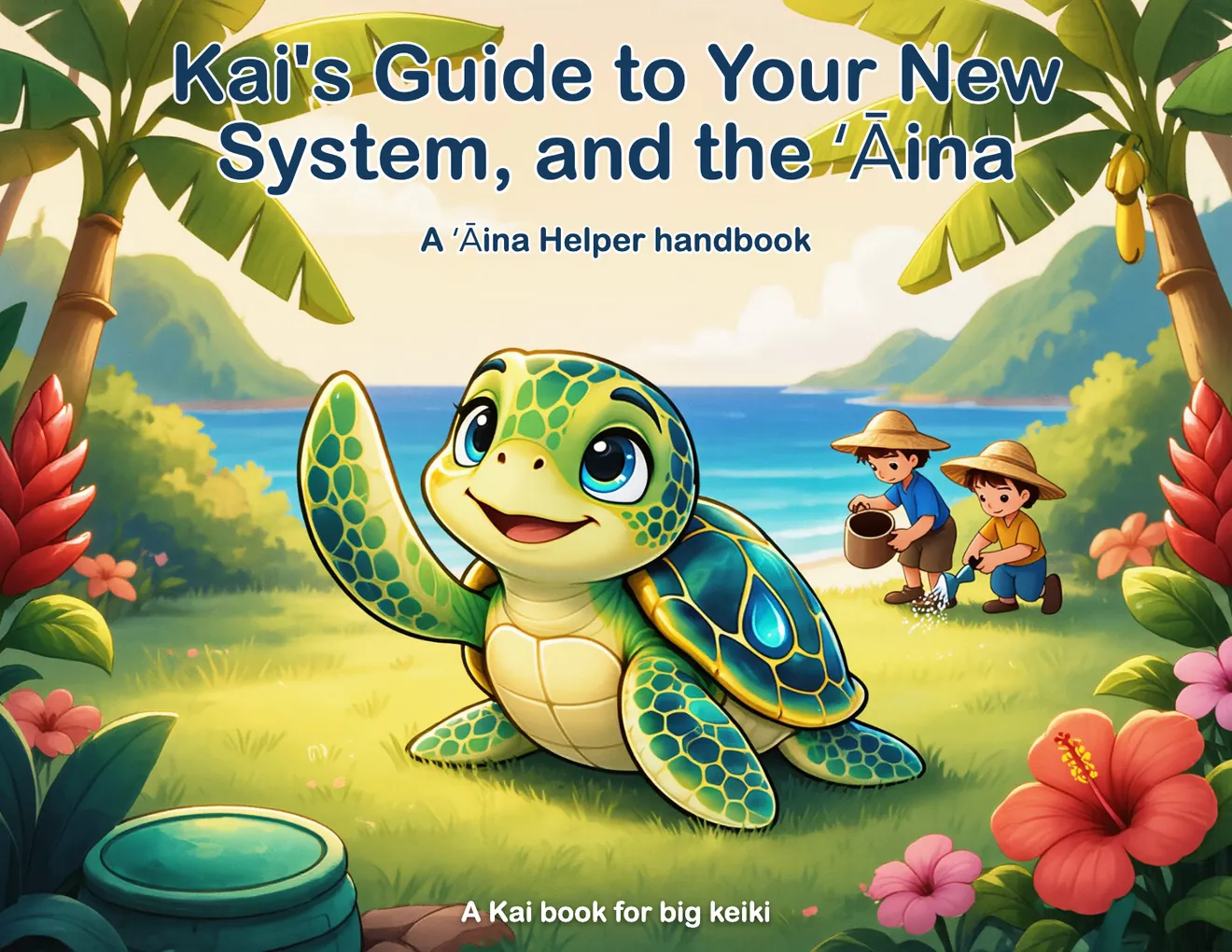
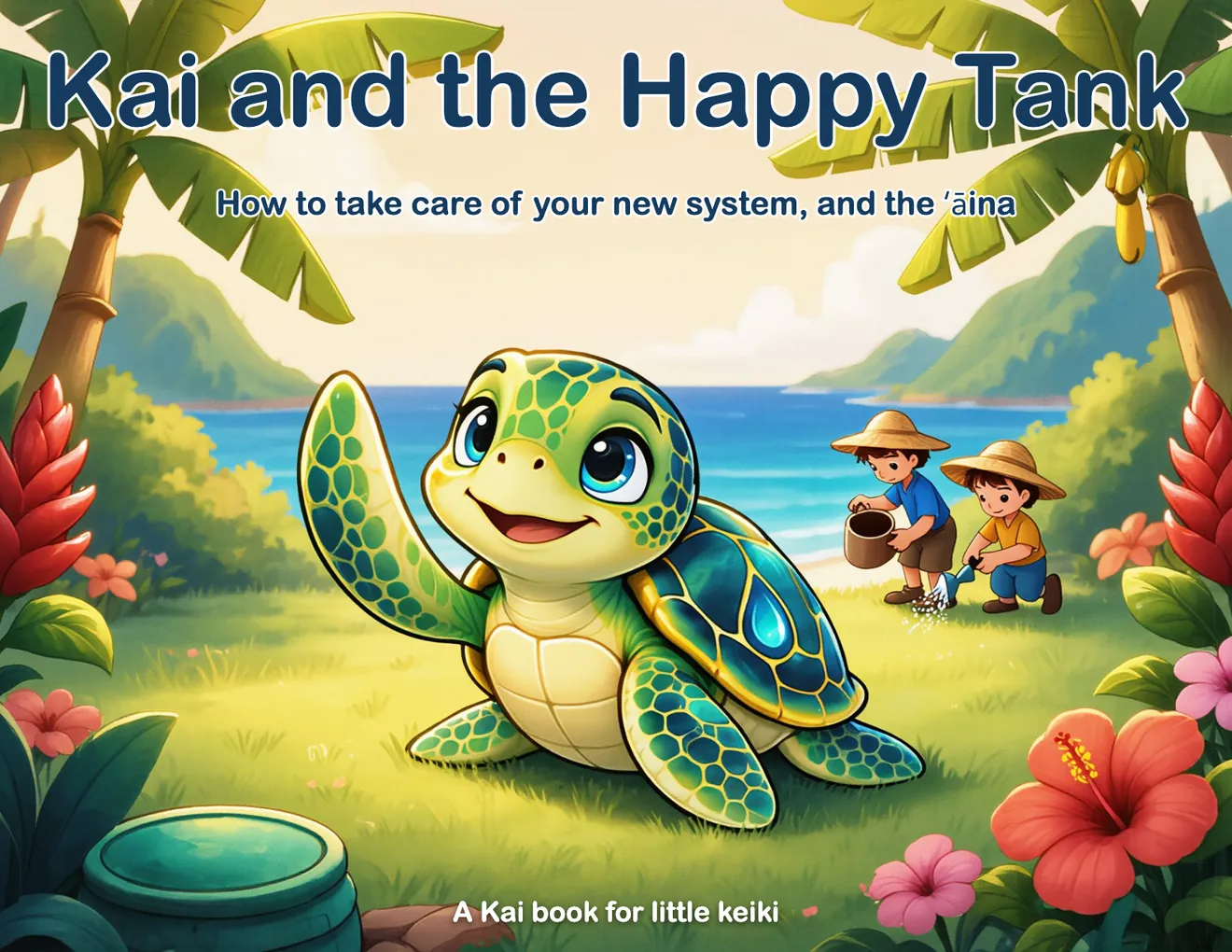
The crew is gone and the new system is in. Now it’s the family’s turn. Two free picture books show keiki how to look after the tank, save water, pick gentle soaps, and mālama the ʻāina and the sea.
Read together
Kai wants to know: how old are you?
Little keiki get a read-aloud story. Big keiki get a handbook with a diagram, a water-saving challenge, a quiz, and a certificate. Both are free to read here or print.
For the grown-ups
What the books teach, and what they don’t.
The books teach good habits that help almost any on-site wastewater system, and they send you back to the people who know your system. They aren’t instructions for one particular tank.
- Only pee, poo, and toilet paper go down the toilet: the “Three Ps.” Wipes (even ones labeled “flushable”), floss, swabs, diapers, and medicine go in the trash or a take-back drop-off.
- No grease, coffee grounds, or food scraps down the sink. Wipe the pan, then compost or bin the scraps.
- Give the tank time: spread laundry over the week, run full loads, and fix drips and running toilets quickly.
- Wash dishes in two basins with the tap off, brush teeth with the tap off, take shorter showers.
- Choose gentle, phosphate-free soaps and detergents, use small amounts, and keep bleach, antibacterial products, and drain openers to a minimum. The big edition has a Label Detective page for reading labels.
- Never pour paint, oil, solvents, or pesticides on the ground or down a drain. They roll makai to the reef. Use mineral sunscreen and pick up litter.
- Keep vehicles, digging, and deep-rooted trees off the tank and drain field, and never open the tank lid. Only trained pros do that.
Ask your installer or the Department of Health
What kind of system do we have? How often should it be inspected and pumped? Which soaps and products are right for it? Where are the tank, lid, and drain field? The big edition has a “grown-up jobs” page with these questions to hand over.
A note on the numbers
Water figures in the big edition are estimates and vary by fixture and washer. A regular faucet uses about 2 gallons a minute, and a showerhead about 2 to 3. The leak figures (a faucet dripping once a second can waste more than 3,000 gallons a year, a leaky toilet up to 200 gallons a day) come from the EPA’s WaterSense “Fix a Leak Week” materials. The sunscreen page reflects Hawaiʻi’s law, in effect since 2021, banning the sale of sunscreens with oxybenzone and octinoxate.
Printing them
- Letter paper, landscape. The pages are 11 by 8.5 inches, so choose “landscape” in the print box.
- For a real book, print double-sided and flip on the short edge, then staple down the left side.
- In the big edition, print the last two pages (the quiz and the certificate) for the fridge.
Kai’s Hawaiian words
- ʻāina
- — the land
- kai
- — the sea
- wai
- — fresh water
- honu
- — green sea turtle
- keiki
- — child
- ʻohana
- — family
- mauka
- — toward the mountain
- makai
- — toward the sea
- mālama
- — to care for
- kuleana
- — responsibility
- lānai
- — porch
- pau
- — finished
- mahalo
- — thank you
- aloha
- — hello, love
Haven’t had the dig yet?
Read Book 1 first: Kai explains what a cesspool is, where the water goes, and who all those people in the backyard are.
ʻĀina Force helps homeowners navigate cesspool conversion by coordinating information, introductions, documentation, and communication. Engineering, permitting, installation, and inspections are performed under separate agreements by appropriately licensed independent professionals and contractors. The books give general good habits, not instructions for any one system: follow your system’s guide and your installer’s advice. Kai is ʻĀina Force’s honu. The books may be printed and shared freely with families, schools, and community groups.